













Obtenir le modèle :
Résumer cet article avec :
In groups operating across several subsidiaries, multi company accounts receivable becomes far more complex to manage. Each entity often uses its own tools, applies its own internal rules and reports information in a fragmented way. As a result, finance teams rarely benefit from a reliable multi entity view and instead work with incomplete reporting that hides both the real customer risk and the true performance of collections.
This lack of alignment makes multi entity operations a common weakness in credit management. Yet when data is centralised and practices are harmonised, multi company collections can become a real performance lever, giving finance teams clear visibility, consistent processes and consolidated control over group-level cash.
The main challenges of multi entity accounts receivable
In groups made up of several subsidiaries or legal entities, collections quickly become difficult to steer.
The core obstacle of multi company collections is the fragmentation of systems. Each subsidiary may use its own ERP, its own invoicing tool or even a simple spreadsheet. This leads to a complete lack of standardisation, no automatic synchronisation and a multiplication of data silos. Local teams see only their own transactions, while the group credit manager is deprived of the consolidated view required to steer multi entity credit management.
I find this debt collection software very functional, with excellent tracking of reminders and a clear, precise dashboard. Customer service is responsive.
Stéphanie H. - Collections Officer
Discover LeanPay 👉
This also weakens visibility on global customer risk. Imagine a customer working with several subsidiaries. They might exceed their overall credit limit without any entity noticing immediately. These major risks remain invisible and increase the likelihood of late payments or defaults. The data technically exists, but its dispersion makes it difficult to use. The group credit manager is left compiling scattered information manually to obtain a reliable risk overview.
A further challenge lies in decentralised reminder processes. Each entity often follows its own reminder rules: different timings, different email templates, different internal procedures. This inconsistency creates mixed messages for customers. Some reminders overlap, others contradict each other and some invoices end up with no follow-up at all. The result is a direct loss of effectiveness across multi company collections.
This lack of harmonisation has concrete consequences: a higher global DSO, more doubtful receivables and excessive time spent searching for information or resolving internal discrepancies. It also complicates strategic decisions such as assigning additional credit limits or adjusting payment terms based on a customer’s global profile.
Finally, the situation creates pressure on local teams, who must juggle their day-to-day responsibilities with manual consolidation work. This leads to errors, extra workload and a direct drop in collections performance.
Turning multi entity operations into a performance driver
While multi entity structures create challenges, they can also become a strategic advantage once data and processes are centralised. The goal is to transform scattered information into a unified view used to manage risk and accelerate cash collection.
Group level data consolidation
.png)
The first step is to bring together customer information from every entity into a single source of truth. This provides a 360 degree view of outstanding amounts, delays and payment behaviour, regardless of how many subsidiaries are involved.
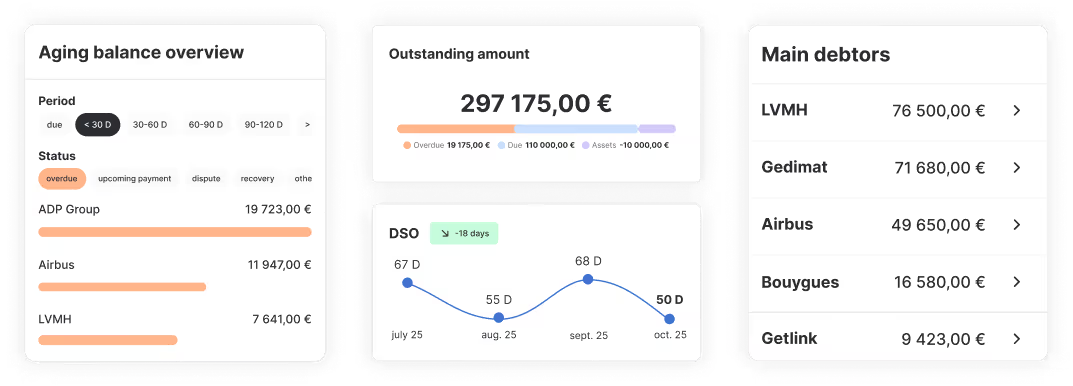
This is exactly what LeanPay, our accounts receivable software, delivers, with features specifically designed for multi entity environments. Users can configure their own consolidated view, define a shared currency and select which entities to include. For example, a company operating across Europe may create a consolidated view per region, filtering only France, only Benelux or the entire continent. This flexibility enables group-level credit managers to analyse transversally while keeping local specificities intact.
LeanPay also allows data grouping by customer code. When a customer exists in several subsidiaries, they appear as a single entity in the analysis, making it easy to spot global risks or credit limit breaches instantly.
Real time consolidated cash oversight
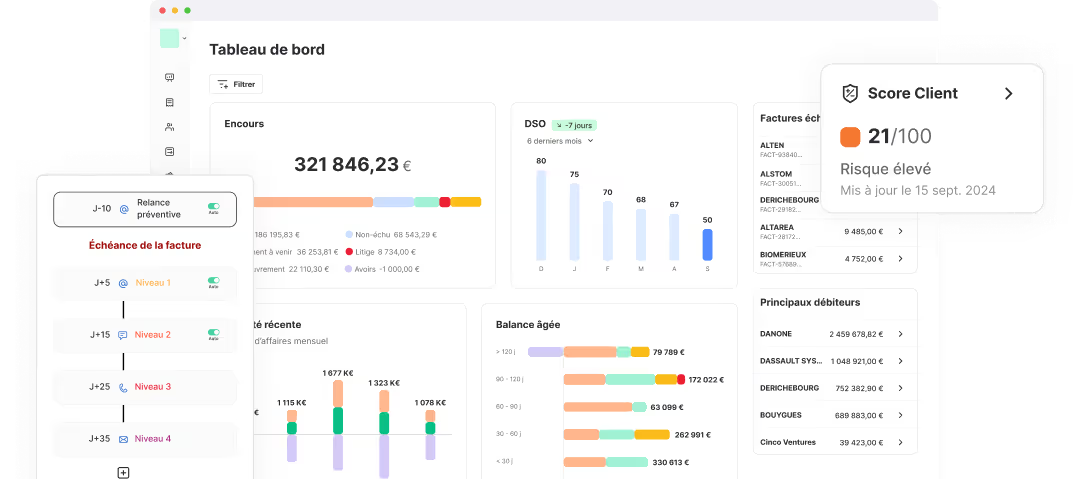
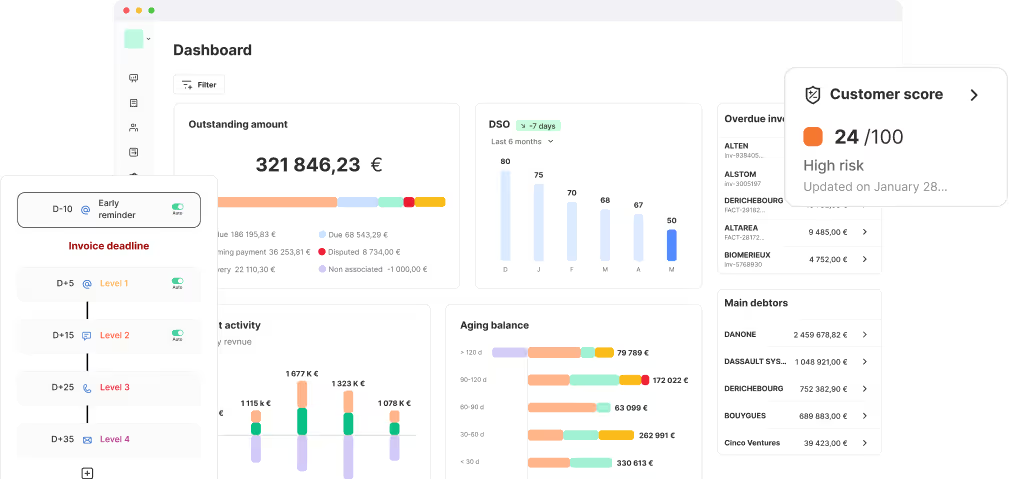
Consolidation in LeanPay is not static. The platform provides real time KPIs: outstanding amounts, global DSO, monthly revenue, aging balance, outstanding reminders and expected cash inflows. Interactive dashboards highlight which entities contribute the most to the overall outstanding balance, as well as the group’s key debtors. With one click, users can drill down to invoice level.
This dual reading (consolidated and detailed) is essential. It preserves a strategic group-level view while maintaining granular analysis within each subsidiary. Access rights guarantee that only authorised users can view the consolidated dashboard, ensuring secure governance.
.png)
.png)
If you would like more information on the consolidated view or on multi entity management in LeanPay, feel free to tell us. We will call you back shortly 📞.
Tangible benefits for credit management
Centralisation of information and consolidated steering turn multi company credit management into a real performance lever:
- Time savings: no more manual reporting or Excel consolidations.
- Harmonised credit policies: shared rules for reminders and credit approval, reducing inconsistencies and improving efficiency.
- Scale effect: best practices identified in one entity can be rapidly deployed across the group.
The evolving role of the group credit manager in multi entity collections
Structuring a multi entity framework fundamentally reshapes the role of the group credit manager. Instead of focusing solely on local, operational follow-up, they take on a strategic role, guiding credit policy and securing group-wide cash flow.
From local follow-up to strategic coordination
With a consolidated view of customer risk, the group credit manager moves from an operational role to a coordinating one. They no longer simply monitor one aging balance or execute reminders. They act as a conductor: setting priorities, harmonising practices and ensuring each subsidiary’s efforts align with the group’s objectives.
Leading and supporting local teams
This requires managerial and cross-functional leadership. The group credit manager helps local teams (often accountants) adopt shared processes, share best practices and build a unified cash culture.
The essential support of modern tools
Such a role cannot be achieved without digital solutions designed for multi company environments. LeanPay provides consolidated dashboards, real time indicators and collaborative features that simplify coordination and free time for analysis and decision-making.
A more strategic function
With reliable, consolidated indicators, the group credit manager becomes a strategic partner to the CFO. They support decisions related to credit allocation, payment terms and resource planning. Their role no longer consists merely of securing cash but of safeguarding growth by managing customer risk at group level.
FAQ to understand multi company AR consolidation
What is multi company accounts receivable?
Multi company accounts receivable refers to the management of invoices, payments and reminders across several subsidiaries within the same group. Each entity usually has its own ERP and processes, which creates fragmented data. A consolidated view allows finance teams to monitor outstanding amounts, customer exposure and cash across all entities in a single place.
Why is multi entity credit management difficult to manage?
Because each entity often uses different systems, follows different reminder rules and reports information separately. This leads to inconsistent processes, duplicated work, missed reminders and an incomplete understanding of global customer risk. Without centralisation, the group cannot control exposure or optimise collections effectively.
How does a consolidated AR view improve collections?
A consolidated view helps identify customers whose global exposure exceeds credit limits, spot delays earlier and harmonise reminder practices across entities. It ensures that every outstanding invoice is followed up, reduces duplicated efforts and shortens global DSO. It also supports strategic decisions on credit approval and payment terms.
What tools support multi entity collections management?
Dedicated accounts receivable solutions with multi entity capabilities, such as LeanPay, offer consolidated dashboards, real time indicators, automated reminders and collaboration features across subsidiaries. They reduce manual consolidation work and provide the visibility required to control group-level cash.
Obtenir le modèle :
Obtenir le modèle :