













Obtenir le modèle :
Résumer cet article avec :
In B2B, payment delays accumulate. As a result, outstanding receivables weigh on companies' cash flow and working capital requirements.
A temporary rise in the outstanding amount is perfectly normal and can reflect seasonal fluctuations. But a sustained increase driven by a growing number of overdue invoices is a different matter. It can create serious cash flow difficulties and put pressure on a business's ability to finance its day-to-day operations. This risk is even greater when you consider the true cost of late payments.
Analysing performance and keeping the outstanding amount under control has therefore become a key priority for finance teams looking to optimise their DSO and manage their aging balance. Even a small reduction in DSO can have a meaningful impact on cash flow. This is why LeanPay includes all of these indicators directly within the reporting section of the platform.
In this article, we cover the definition of outstanding receivables, how to calculate your outstanding amount, and the key challenges of managing it effectively for SMEs and mid-sized businesses.
What are outstanding receivables?
Outstanding receivables represent the total amount owed to a business by its customers at any given point in time. The outstanding amount brings together three elements:
- Overdue invoices: invoices that have passed their payment due date
- Current invoices: invoices that have been issued but have not yet reached their due date
- Invoices not yet issued: relating to transactions that have taken place but where an invoice has not yet been raised
In other words, the outstanding amount is the total sum that customers owe a business for goods or services provided.
It is worth noting that the equivalent on the other side of the balance sheet is the accounts payable balance, which represents the total a business owes to its own suppliers.
At the time of the financial statements, it is necessary to calculate the outstanding amount, as it must appear in the current assets section of the balance sheet.
I find this debt collection software very functional, with excellent tracking of reminders and a clear, precise dashboard. Customer service is responsive.
Stéphanie H. - Collections Officer
Discover LeanPay 👉
How to calculate your outstanding amount
Calculating the outstanding amount is straightforward. To find the total at any given point in time, simply add together all current overdue invoices, current invoices not yet due and invoices not yet issued. In short, everything that has not yet been paid by customers.
Outstanding amount = overdue invoices + current invoices not yet due + invoices not yet issued, - any deposits or advance payments already received
To calculate the average outstanding receivables over a given period, divide the revenue for that period by the number of days in the period, then multiply by the average customer payment time over the same period.
For example, a business with annual revenue of 5 000 000 € and an average payment time of 58 days would calculate its average outstanding amount for the year as follows:
Average outstanding amount = (5 000 000 / 365) x 58 = 794 520 €
How to manage your outstanding receivables
Having a clear, real-time view of your financial health, by tracking the key KPIs of your accounts receivable, is essential for managing cash flow effectively.
This visibility allows you to anticipate how your outstanding receivables will evolve based on your customers' payment behaviour. Identifying your most reliable payers and your most problematic ones requires putting in place a credit scoring process, so you can better assess customer risk before entering into a commercial relationship.
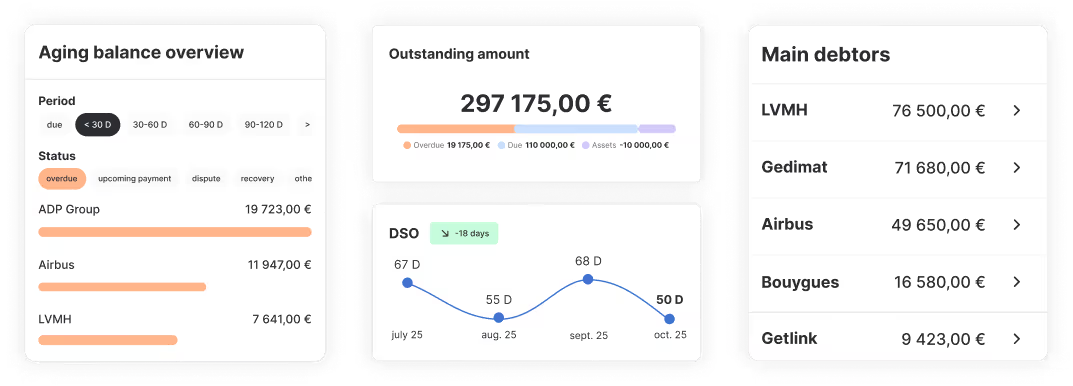
With a debt collection software such as LeanPay, you can access all of these features for visualising and classifying your outstanding amount and your customer base.
With LeanPay, you can also:
- Plan your payment reminder process: by creating reminder workflows tailored to each customer's profile and varying the channels and tone of your communications, you will improve the effectiveness of your collections while saving your finance team valuable time.
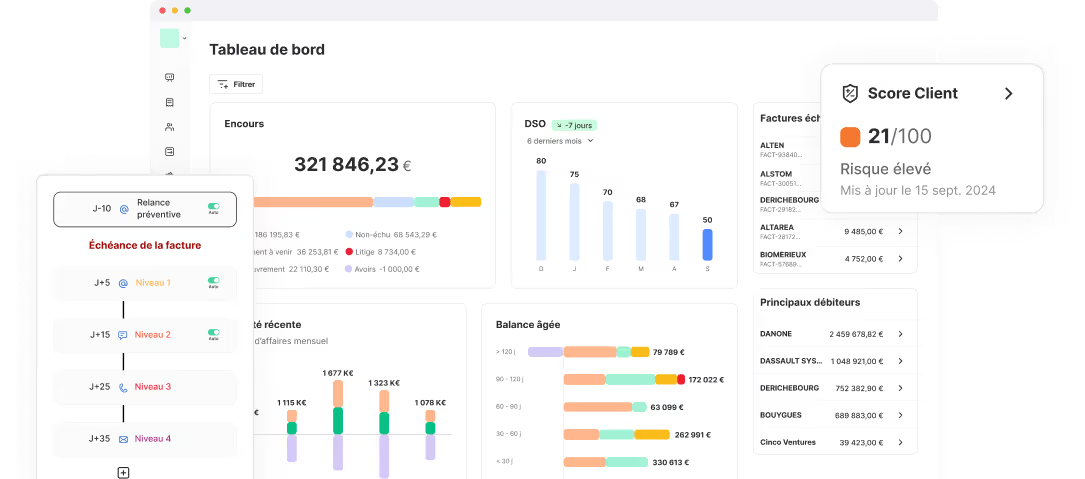
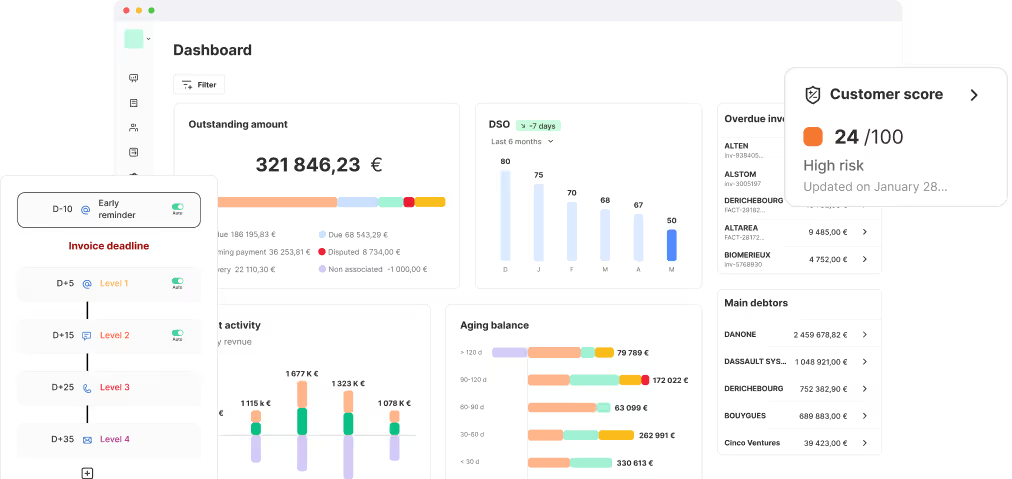
- Visualise your position in real time: LeanPay gives you access to an accounts receivable dashboard bringing together all the key data you need to manage your accounts receivable (outstanding amount, average payment times, aging balance and more), updated in real time.
- Offer customers a secure online payment platform: customers can pay their invoices directly from within your reminder emails.
- Work collaboratively: customer account and reminder tracking is made easier through multi-user access on the LeanPay platform, with the ability to assign account managers to specific customers.
- Manage credit limits more effectively: in LeanPay, you can set a maximum outstanding amount per customer and receive notifications when threshold levels are reached.
- Monitor the financial health of your customers: LeanPay helps you anticipate risk through credit scoring updated in real time.
- Manage disputes end to end: you can flag an invoice as disputed, exclude it from reminders and track its progress through to resolution.
- Initiate legal recovery proceedings directly from LeanPay.
Obtenir le modèle :
Obtenir le modèle :