













Obtenir le modèle :
Résumer cet article avec :
Factoring is one of the most widely used receivables financing solutions in B2B transactions. One of the reasons it is so popular is that it gives suppliers a guarantee on their receivables, commonly known as trade credit insurance.
It is also possible to take out trade credit insurance independently, without using a factor. Depending on a business's payment and collections practices, cover can be arranged directly with a specialist insurer.
This article explains how trade credit insurance works, its key benefits and the role it plays in securing your receivables.
I find this debt collection software very functional, with excellent tracking of reminders and a clear, precise dashboard. Customer service is responsive.
Stéphanie H. - Collections Officer
Discover LeanPay 👉
Trade credit insurance: definition
Just as physical assets can be protected by insurance, invoices can also be covered once they fall due.
When a business takes out a credit insurance policy, the insurer provides a receivables guarantee covering commercial risk. This protects the business against all losses arising from unpaid invoices.
Unlike invoice factoring, trade credit insurance only comes into play in the event of a customer default.
Throughout the life of the policy, the insurer is responsible for:
- compensating the supplier in the event of unpaid invoices
- monitoring the customer's solvency on an ongoing basis
- withdrawing the guarantee if the customer is deemed too high a risk
The way trade credit insurance works is very similar to factoring:
.png)
Just like a factor, the insurer sits between the supplier and the customer. It handles compensation to the supplier for unpaid invoices and manages the debt recovery process on an outsourced basis.
How trade credit insurance works
From the moment a trade credit insurance policy is taken out, the insurer commits to providing a compensation guarantee. It is this guarantee that determines whether a claim for unpaid invoices can be made.
The policy may also include a credit limit clause, setting a maximum outstanding amount for certain customers. If that limit is exceeded, the invoices concerned fall outside the scope of cover and are no longer insured.
Compensation for unpaid invoices
Once a receivable is guaranteed by the insurer, any unpaid amount is compensated at the rate agreed in the policy, calculated on the net amount of the invoice. As a general rule, compensation covers around 90% of the invoice value.
Receivables that do not receive a guarantee, because the insurer has assessed the customer as too high a risk, will not be eligible for compensation.
Debt recovery
Recovery of invoices guaranteed by the insurer is triggered automatically as soon as a payment default occurs. The insurer will then seek to recover the compensation amount paid to the policyholder, or part of it.
The policyholder can also approach the insurer to handle recovery of invoices that are not covered by the policy. In this case, the insurer acts in the same way as any external debt collection agency.
Customer risk monitoring
Throughout the life of the trade credit insurance policy, the insurer continuously monitors the customer's solvency. The purpose is to regularly reassess the risk of non-payment and, if that risk is deemed too high, to withdraw the guarantee originally granted for that customer.
Withdrawal of the trade credit insurance guarantee
Over time, no business is immune to one of its customers becoming insolvent. If this happens while a trade credit insurance policy is in force, the insurer may decide to withdraw the compensation guarantee previously granted for that customer.
To ensure a minimum level of cover in the event of a guarantee withdrawal, two options are available:
- The first option is to maintain cover on orders already placed, meaning goods currently being manufactured or in the process of being delivered to the customer in question. For this option to be accepted by the insurer, proof of the progress of the orders must be provided.
- The second option is to certify the state of delivery commitments to the customer affected by the reduction or withdrawal of the guarantee. This certification must be submitted within 15 days of the insurer's decision and must confirm the amounts involved: planned deliveries, deliveries currently in progress and outstanding invoices.
The benefits of trade credit insurance
There are two main reasons for a business to take out trade credit insurance.
The first is bad debt protection. It is an effective way to limit this risk as a complement to the in-house collections process already in place.
The second, and arguably the greater benefit of trade credit insurance, is the access it provides to accurate, real-time information on the solvency of B2B customers. This is a significant asset for financial decision-making. It makes it possible, for example, to:
- negotiate payment terms based on the customer's financial health
- identify a potential deterioration in a customer's situation early and take preventive action, such as terminating the commercial relationship if necessary
Minimising customer risk through better accounts receivable management
While trade credit insurance is a highly effective solution for limiting the risk of unpaid invoices, it can only be called upon once the situation has already deteriorated.
Optimising accounts receivable management as a preventive measure is the best way to reduce the need for trade credit insurance in the first place.
Here is how to do it:
- Put in place a systematic and automated payment reminder process for all invoices.
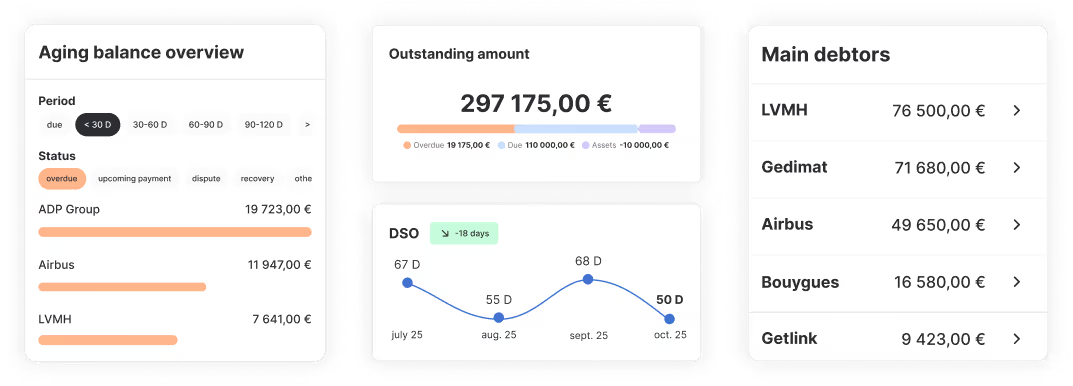
- Maintain a clear, real-time view of your outstanding amounts.
- Use a tool like LeanPay to reduce your payment delays.
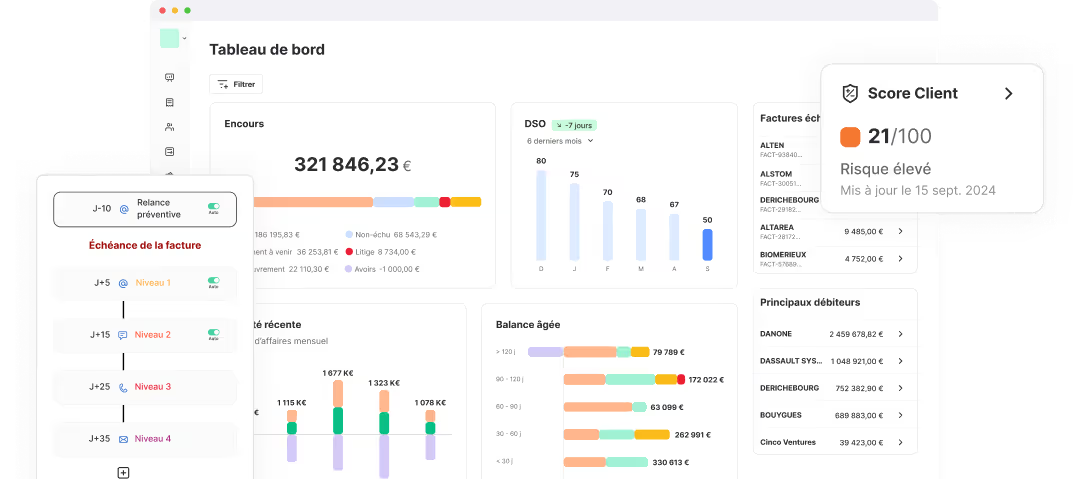
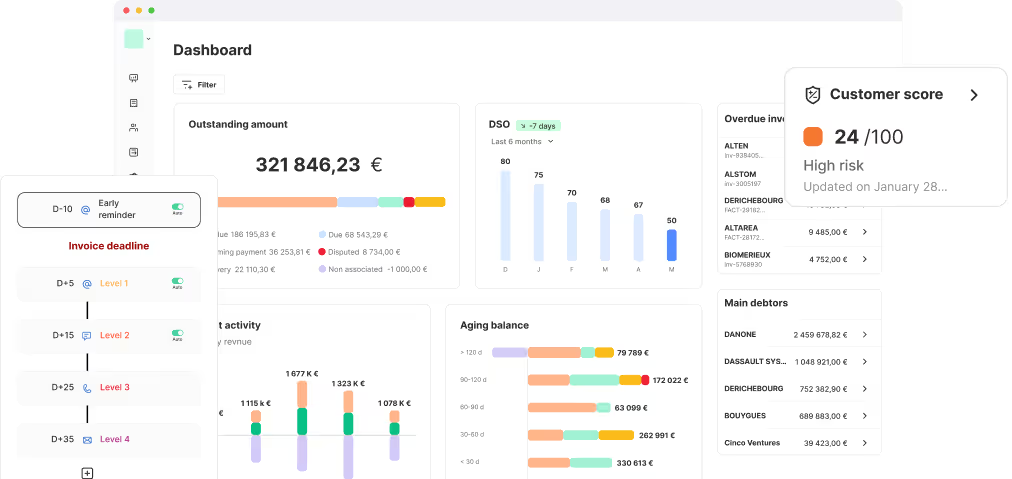
Through our integrations with leading financial information providers (Ellisphere, Creditsafe, Altares), LeanPay's credit risk management software helps you monitor customer risk proactively.
Our connection with Allianz Trade, the world leader in trade credit insurance, also gives you direct access to your guarantee amounts and contract details from within the platform.
Key indicators such as credit scoring and authorised credit limits allow you to anticipate risk by monitoring the financial health of your customers. You also receive automatic alerts in the event of insolvency proceedings against one of your customers.
Reducing DSO and anticipating customer default risk on a single platform: that is what LeanPay makes possible.
Obtenir le modèle :
Obtenir le modèle :