













Obtenir le modèle :
Résumer cet article avec :
Business insolvencies and payment delays have been rising steadily across Europe, putting increasing pressure on suppliers' cash flow and working capital.
For SMEs and mid-sized businesses, the consequences are significant: unpredictable cash receipts, direct pressure on cash flow and working capital requirements, difficulties accessing finance, strained relationships with financial partners and an increased risk of business failure.
Against this backdrop, one little-known but effective solution is gaining ground: reverse credit insurance. Here is everything you need to know.
Reverse credit insurance: definition
Reverse credit insurance is a type of trade credit insurance contract designed to protect the supplier (creditor) against unpaid invoices.
Unlike traditional trade credit insurance, where it is the supplier who takes out cover on their customers, here it is the customer (debtor) who takes out insurance on themselves, for the benefit of their supplier.
This guarantee ensures that invoices are paid on time and limits the financial risk carried by the supplier.
I find this debt collection software very functional, with excellent tracking of reminders and a clear, precise dashboard. Customer service is responsive.
Stéphanie H. - Collections Officer
Discover LeanPay 👉Reverse credit insurance: benefits for both sides
Reverse credit insurance offers advantages for both parties, which is why it is becoming an increasingly popular solution.
Benefits of reverse credit insurance for the supplier (creditor)
- Guaranteed payment on the due date
- Improved cash flow management and DSO
- Confirmation of the customer's solvency before agreeing to potentially extended payment terms
- Restored trust in the customer relationship
- Secured receivables and reduced risk of unpaid invoices
- No cost to the supplier (the customer debtor bears the premium) unlike traditional trade credit insurance
Benefits of reverse credit insurance for the customer (debtor)
- Ability to negotiate more favourable payment terms
- Improved supplier relationships and greater trust
- Access to off-balance-sheet working capital financing
- A more secure and reliable supply chain
Reverse credit insurance: how it works
Here is how to put a reverse credit insurance arrangement in place.
- Your customer requests a solvency assessment from a credit insurer.
- The credit insurer analyses the financial strength of the business based on criteria such as payment history, financial health and sector of activity.
- If the assessment is positive, the insurer issues a guarantee up to a maximum outstanding amount. This amount can be spread across several suppliers.
- When placing an order, your customer presents you with their financial guarantee covering the invoices, in your favour.
- You deliver to your customer.
- If your customer defaults at the payment due date, the credit insurer compensates you for the guaranteed invoices.
The coverage rate varies by insurer. Urios, for example, covers up to 90% of the net amount of guaranteed invoices.
.png)
Reverse credit insurance: FAQ
Who pays the insurance premium?
The premium is paid by the debtor and varies according to the level of risk and the amount covered. It represents a percentage of the receivables insured.
What level of risk coverage is provided?
Coverage rates vary by insurer and contract type. Some cover up to 90% of receivables, while others include specific excesses and exclusions.
Who should propose reverse credit insurance?
Either party can raise it. A large business may require this guarantee from an SME before entering into a contract, while an SME may proactively suggest it to reassure a major supplier and build trust from the outset.
When should you propose reverse credit insurance to your customers?
Reverse credit insurance is particularly relevant in the following situations.
When your business operates in a sector with long payment cycles (payment terms exceeding 60 days)
Long payment cycles put pressure on cash flow, as you need to finance other operations while waiting to be paid. With reverse credit insurance, you have a guarantee on future receivables, which reduces the risk of default and allows you to plan your liquidity needs more accurately.
When onboarding a new customer
With a new customer, you do not always have enough information to assess their solvency and payment reliability. Reverse credit insurance provides a way to secure the relationship: by asking the customer to take out this cover, you ensure that payments will be protected in the event of default. It also facilitates negotiations and accelerates the build-up of a lasting partnership.
When exporting to emerging or unstable markets
Risk levels are higher in these markets, due to differences in regulation, currency fluctuations and exposure to economic or political instability. Reverse credit insurance allows suppliers to limit their exposure by requiring overseas customers to guarantee their own payments. This reduces the risk of bad debt and supports international growth by providing an additional layer of security.
Reverse credit insurance and risk monitoring: securing your AR
Reverse credit insurance should not be seen as a standalone solution, but as one tool within a broader credit risk management strategy. Securing your receivables and limiting the risk of unpaid invoices requires combining several complementary approaches. Here are the key ones.
- Customer solvency analysis: before granting payment terms, it is essential to assess the customer's financial strength by reviewing their accounts, debt levels and payment history.
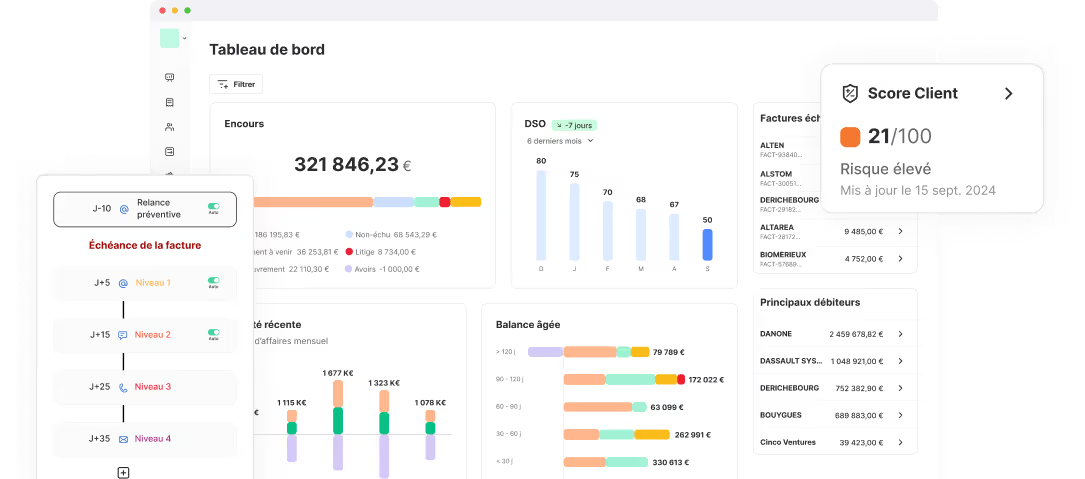
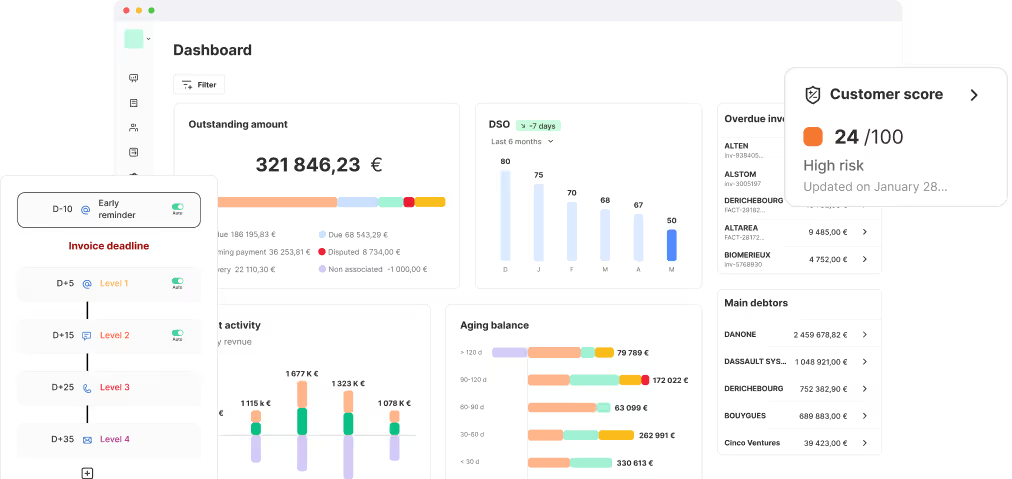
- Credit scoring: scoring tools provide an objective assessment of a customer's default risk. LeanPay's credit risk management software is connected to Creditsafe, Altares, Infolegale and Ellisphere, delivering their data on your monitored customers in real time.
- Insolvency monitoring: receive automatic alerts in LeanPay when a customer enters safeguard, administration or liquidation proceedings.
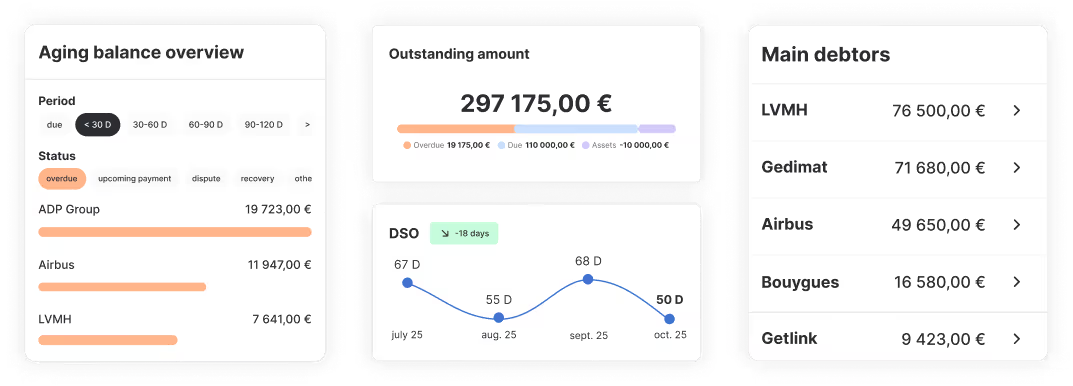
- Traditional trade credit insurance: this protects you directly by guaranteeing payment of your receivables in the event of customer default. In LeanPay, you can view your trade credit insurance contract amounts through our integrations with Allianz Trade and Coface.
- Invoice factoring: by selling certain receivables to a factor, you can obtain immediate payment on those invoices, improving your cash flow while reducing your exposure to bad debt protection risks.
If you would like to find out more about LeanPay, get in touch and we will call you back.
Obtenir le modèle :
Obtenir le modèle :