













Obtenir le modèle :
Résumer cet article avec :
The debt collection rate is one of the key indicators used to measure how effectively a business recovers outstanding invoices. Monitoring this KPI helps businesses better understand the performance of their collections process and identify areas for improvement.
However, improving collections performance first requires understanding how to calculate the metric correctly and which actions can influence it.
This article explains how the debt collection rate works, how to calculate it and which best practices can help improve it.
What is the debt collection rate?
The debt collection rate measures the proportion of outstanding invoices successfully recovered compared with the total amount due for collection.
In other words, it evaluates a company’s ability to convert unpaid invoices into cash collections.
This KPI provides a concrete view of how effective your accounts receivable management process really is.
A high collection rate generally reflects efficient follow-up processes.
However, a lower rate may instead reveal:
- recurring late payments;
- frequent disputes;
- insufficient invoice follow-up.
I find this debt collection software very functional, with excellent tracking of reminders and a clear, precise dashboard. Customer service is responsive.
Stéphanie H. - Collections Officer
Discover LeanPay 👉Debt collection rate formula
The debt collection rate is calculated by dividing the amount successfully recovered by the total amount outstanding for collection, then multiplying the result by 100.
Debt collection rate = (amount recovered / total outstanding receivables) × 100
The amount recovered corresponds to payments received. The total outstanding receivables correspond to all overdue invoices included within the scope of analysis.
Debt collection rate example
Let’s look at a simple example.
A company has 100 000 € in outstanding receivables requiring collection and successfully recovers 85 000 €.
Debt collection rate = (85 000 / 100 000) × 100 = 85 %
The business therefore recovered 85 % of the receivables concerned.
What affects the debt collection rate?
The debt collection rate directly depends on the amount successfully collected over a given period.
Several factors can influence this result. Identifying them helps businesses better understand changes in collections performance and act on the areas most likely to improve recovery rates.
The quality of the invoicing process
Clear, accurate and timely invoicing reduces the risk of disputes or administrative delays that can postpone payment and complicate collections.
The quality of the invoicing process is therefore one of the first factors influencing the debt collection rate.
The speed of payment reminders
The earlier payment reminders are sent, the higher the chances of recovery.
Fast follow-up shortly after the due date often resolves a large proportion of late payments before they become long-term overdue accounts.
The responsiveness of your teams therefore plays a major role in recovering outstanding amounts.
Dispute management
Disputes are one of the most common causes of payment blockage.
When an invoice is disputed, payment is often suspended until the issue is clarified.
Handling disputes quickly helps reduce delays and prevents receivables from remaining blocked for several weeks or even months.
Prioritising receivables
Not all receivables present the same level of risk.
Some accounts require closer attention, particularly when:
- payment delays become recurrent;
- outstanding amounts are significant;
- customer behaviour deteriorates.
Identifying high-priority receivables helps businesses focus collections efforts on the accounts most likely to impact cash flow.
How to improve your debt collection rate
Once the main influencing factors have been identified, several actions can help improve the debt collection rate.
Centralise accounts receivable management
When collections data is spread across multiple tools or spreadsheets, it becomes harder to coordinate payment reminders and quickly identify accounts requiring action.
Centralising accounts receivable management therefore helps businesses:
- improve visibility;
- streamline collections workflows;
- react faster to late payments.
Through its integrations ecosystem including ERP systems, accounting software, credit insurance providers and financial data platforms, LeanPay centralises all accounts receivable data in a single environment.
This enables businesses to:
- monitor invoice status and outstanding amounts using synchronised real-time data;
- identify late payments quickly and adapt collections actions accordingly;
- prioritise sensitive accounts through a complete view of accounts receivable.
Structure your reminder workflows
Well-defined reminder workflows simplify follow-up processes and reduce the risk of overdue invoices remaining without action for weeks.
Our AR software, LeanPay, helps businesses organise collections processes by enabling them to:
- define structured reminder workflows with actions planned before and after due dates;
- personalise reminder plans according to customer segmentation and risk level;
- maintain consistency through a complete history of collections actions.
.png)
Analyse accounts receivable in real time
Improving collections performance often requires deeper analysis of accounts receivable to identify:
- the accounts representing the highest financial exposure;
- customers presenting the highest risk of non-payment;
- deteriorating payment behaviour.
This analysis generally relies on indicators such as invoice aging, outstanding amounts or payment delays.
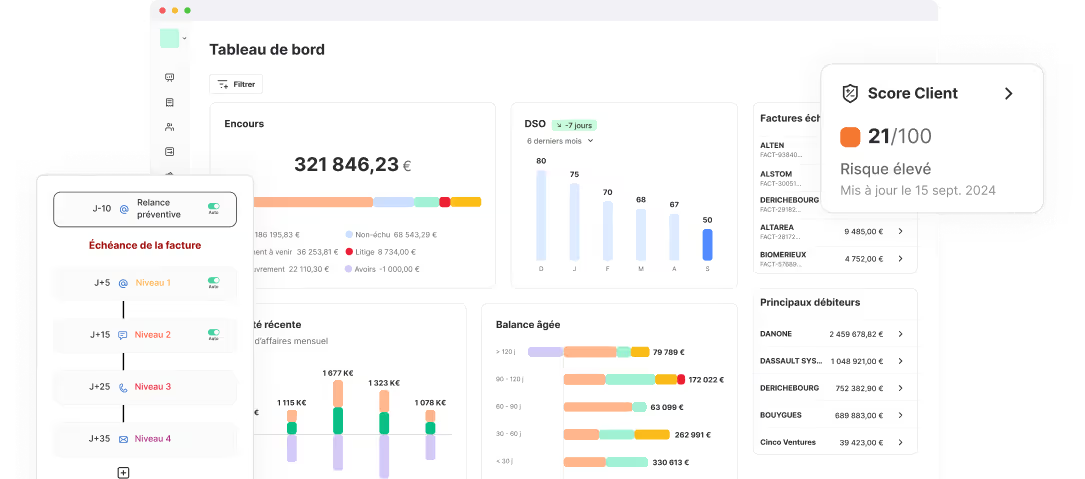
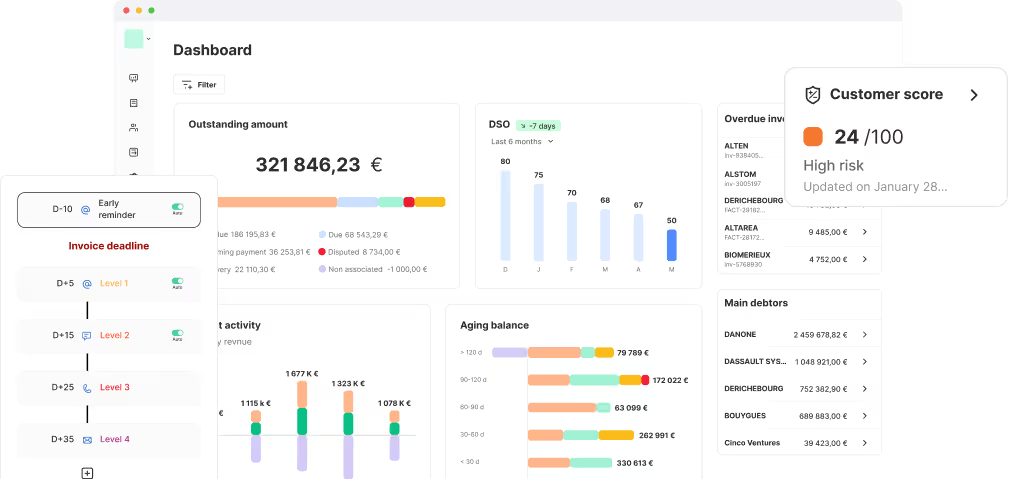
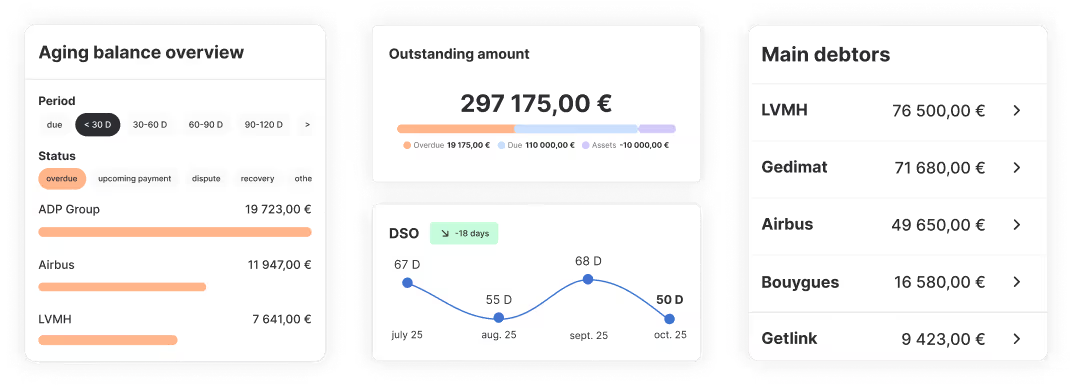
With LeanPay’s accounts receivable dashboard, you can analyse in real time:
- Aging balance to identify overdue invoices quickly and focus on the oldest receivables first.
.png)
- Outstanding amounts to detect customers representing the highest financial exposure.
.png)
- DSO to measure payment delays across the entire customer portfolio.
.png)
In addition, each customer account includes several useful indicators to analyse payment behaviour, including:
- average payment delay;
- customer weight within total turnover;
.png)
- average payment terms;
- payment behaviour scoring based on observed delays.
.png)
LeanPay helps businesses improve their debt collection rate by providing greater visibility, structured workflows and real-time collections reporting.
More than 3 000 finance teams already use LeanPay to regain control over accounts receivable, with an average observed DSO reduction of 40 %.
To discover how LeanPay can help you reduce DSO sustainably, book your personalised demo with one of our experts.
Obtenir le modèle :
Obtenir le modèle :