













Obtenir le modèle :
Résumer cet article avec :
Financial reporting is a central tool for finance departments. It structures how performance is read and serves as the foundation for day-to-day management decisions.
But as cash flow management becomes more complex, a question arises: how can you extract more value from data that is already available, without overloading the existing reporting process?
Some of that data has a direct impact on cash flows, yet often remains underused in financial management. This is particularly true of accounts receivable, which plays a much more strategic role in financial reporting than many businesses realise.
I find this debt collection software very functional, with excellent tracking of reminders and a clear, precise dashboard. Customer service is responsive.
Stéphanie H. - Collections Officer
Discover LeanPay 👉
From financial reporting to decision-making: unlocking the full value of accounts receivable
Financial reporting brings together the key performance and cash flow indicators used by finance teams to monitor and manage the business. While the exact metrics vary from one organisation to another, certain indicators remain essential: cash flow, revenue, margins, operating costs and profitability form the foundation of financial analysis.

Within this framework, businesses typically monitor outstanding amounts to assess their exposure at a given point in time. While this provides a useful snapshot and a first read on payment terms, it offers only limited visibility into how cash collections are actually evolving.
Accounts receivable, understood as the full management of customer receivables over time, including payment delays, payment behaviour, disputes and debt collection activities, goes far beyond this static view. Yet this broader, more dynamic perspective is rarely integrated into financial reporting, despite its direct impact on short-term cash flow and financial performance.
The 3 levels of accounts receivable data maturity in financial reporting
While accounts receivable metrics often feature in financial reporting, the value they generate depends largely on how the underlying data is actually used. In practice, organisations can take very different approaches to leveraging this information.
Three levels of data maturity can generally be identified, each reflecting a different approach to financial reporting and decision-making.
1. A descriptive view of accounts receivable in financial reporting
At this stage, metrics are used primarily to describe a situation. Outstanding amounts, DSO and aging balance provide a reliable snapshot at a given point in time.
This view is essential, but it remains limited from a management perspective. These indicators highlight gaps without always explaining what drives them or what they mean for the short term.
2. Integrating payment behaviour analysis into financial reporting
When DSO, outstanding amounts, aging balance and payment delays are analysed together, financial reporting becomes significantly more insightful.
Examining payment trends, segmenting receivables by customer, aging profile or payment profile, and identifying recurring delays all help finance teams better understand the factors affecting cash collection.
At this stage, financial reporting moves beyond observation and starts providing explanations.
3. Using accounts receivable data to drive financial reporting decisions
When accounts receivable data is used beyond simple monitoring, it adds a more operational dimension to financial reporting.
Collection trends, early warning signals and the measurable impact of collection actions all provide valuable context for financial decision-making.
The goal here is not to generate broad financial forecasts, but to strengthen the finance team's ability to make well-informed decisions based on reliable, actionable indicators.
How accounts receivable data enhances financial reporting
When used beyond basic monitoring, accounts receivable data makes financial reporting more meaningful and actionable. It provides concrete insights into cash flow movements and the decisions that follow. This contribution takes several forms.
Connecting financial indicators
Cash flow fluctuations no longer need to be analysed in isolation. They can be linked to payment behaviour, recurring delays or the concentration of outstanding amounts among specific customers. As a result, financial reporting becomes more coherent and more explanatory.
Improving risk visibility in financial reporting
Without increasing the number of KPIs, accounts receivable data helps identify warning signs earlier: repeated delays from the same customer, a growing concentration of outstanding amounts among higher-risk accounts, or a decline in the effectiveness of payment reminders. This strengthens the ability of financial reporting to flag emerging risks while remaining focused and manageable.
Supporting better financial decisions
By drawing on factual, real-time data, finance teams gain a stronger foundation for prioritising actions and adjusting their approach, while maintaining a clear overall view of the business.
How finance teams make better decisions with financial reporting
When AR metrics are better integrated into financial reporting, they go beyond simply describing a situation. They become a direct decision-making tool.
This sharper read helps finance teams:
- Prioritise actions with the greatest cash flow impact
By identifying the outstanding amounts and payment behaviours that weigh most heavily on cash collection, teams can focus on the actions most likely to move the needle. - Balance commercial objectives and cash flow priorities
Accounts receivable data helps finance teams make informed trade-offs between growth and cash flow protection. For example, a strategically important customer may generate significant revenue while consistently paying late. Better visibility within financial reporting helps strike the right balance between maintaining the relationship and protecting cash flow. - Adjust payment terms when necessary
Analysing outstanding amounts, payment delays and payment behaviour together makes it easier to spot situations where payment terms need to be reviewed, based on the risk profile observed. - Gain a clearer view of customer risk
Without creating additional KPIs, financial reporting can incorporate more operational signals to help anticipate short-term risks and cash flow pressure.
Integrating accounts receivable data into financial reporting
For accounts receivable data to genuinely enrich financial reporting, it needs to be reliable, centralised and easy to analyse. In practice, this information is often spread across multiple tools, which limits its usefulness for financial management and decision-making.
LeanPay, our AR software, is built around this integration logic. The platform centralises accounts receivable data and makes it actionable within a decision-oriented financial reporting framework that complements existing processes.
Finance teams gain access to:
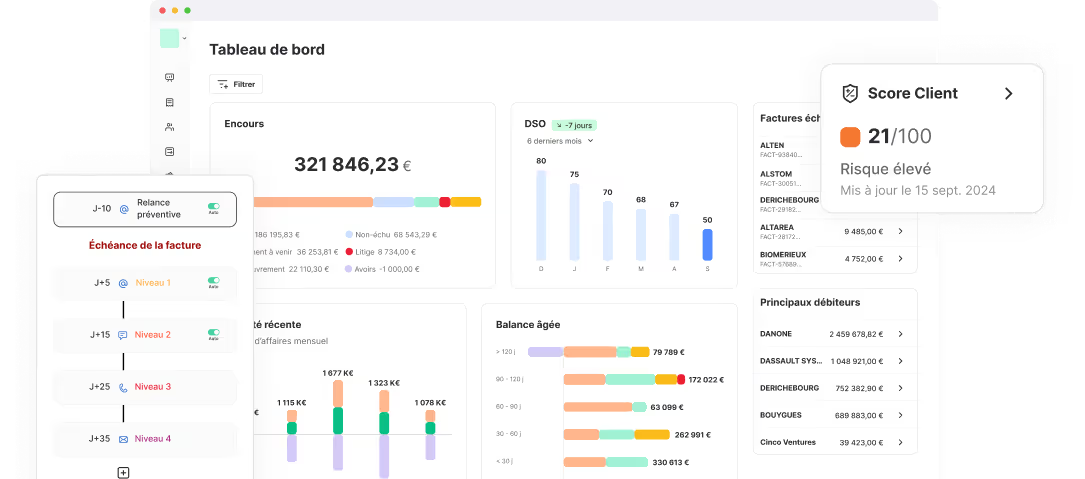
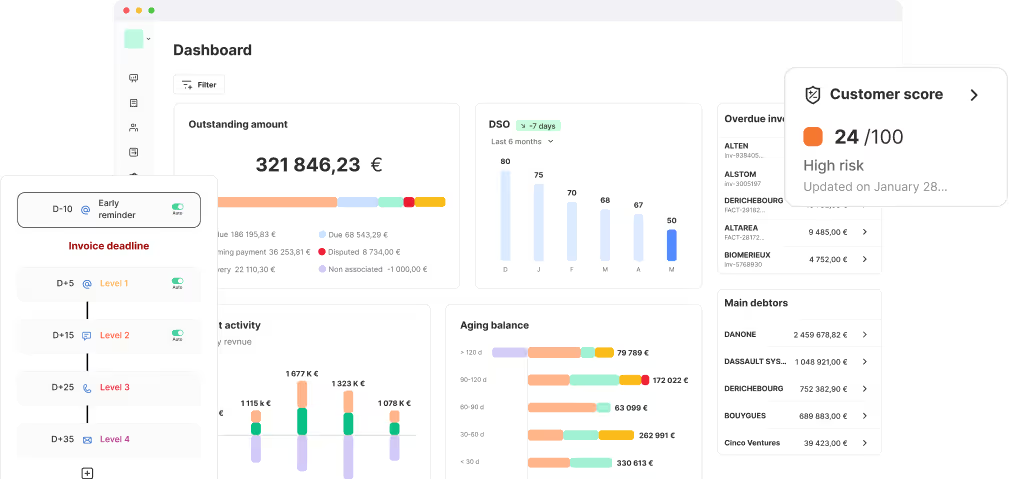
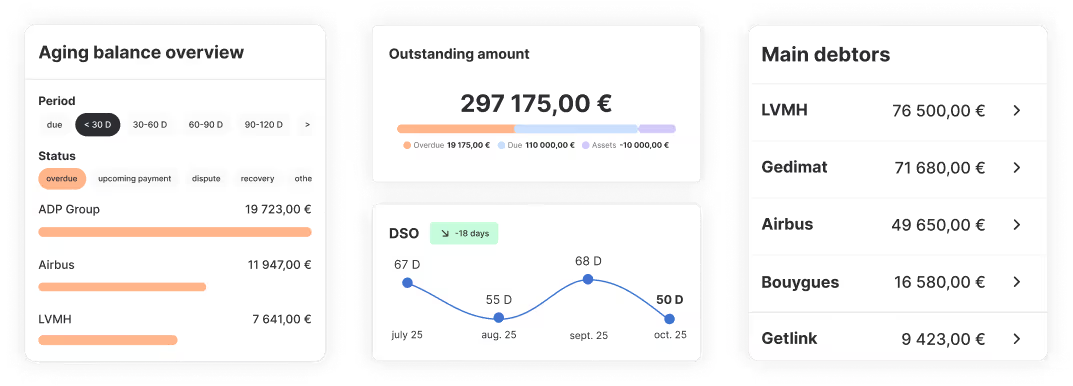
- Real-time accounts receivable reporting data, including DSO, payment reminder performance and aging balance, through LeanPay's accounts receivable dashboard
- Analysis of reminder effectiveness and proactive alerts on short-term risks
.png)
In addition, accounts receivable management is further strengthened by external credit risk data through integrations with leading financial information and credit insurance providers, including Altares, Creditsafe, Coface, Allianz Trade, Ellisphere and Infolegale. Finance teams can access customer credit scoring, recommended credit limits and continuously updated risk information directly within LeanPay.
With LeanPay, accounts receivable becomes a genuine decision-support tool for finance teams. Get in touch to discover how LeanPay turns your collections data into actionable financial reporting insights.
FAQ: financial reporting and accounts receivable
What is financial reporting?
Financial reporting is the process of tracking and communicating a company's key financial metrics, including cash flow, revenue, margins and profitability, to support management decisions.
Why does accounts receivable matter for financial reporting?
Accounts receivable data provides real-time visibility into cash collection performance, payment behaviour and customer risk. When integrated into financial reporting, it helps finance teams make more informed and timely decisions.
How can accounts receivable improve financial reporting decisions?
By connecting outstanding amounts, DSO and payment trends to broader financial indicators, accounts receivable reporting gives finance teams the context they need to prioritise actions, manage risk and protect cash flow.
What tools support financial reporting on accounts receivable?
Platforms such as LeanPay centralise accounts receivable data and make it available in real time, with built-in financial dashboard views covering DSO, aging balance, reminder performance and customer credit scoring.
Obtenir le modèle :
Obtenir le modèle :