













Obtenir le modèle :
Résumer cet article avec :
The average late payment period decreased from 17,3 to 16,48 days between the end of 2023 and Q1 2025 according to Ellisphere. This slight improvement, although encouraging, is not enough to eliminate risk. Unpaid invoices continue to weaken companies’ cash flow, especially when the reminder process is poorly structured.
The debt collection letter plays a key role toward the end of the amicable recovery phase, when emails, calls and SMS reminders have failed. More formal, it adds weight to your request and provides written proof in the event of a legal process. Reminder strategy, templates, standard or registered letter: here is everything you need to maximise your chances of recovering payments.
Standard or registered debt collection letter: when and how to use it?
A debt collection letter is used at a late stage of recovery, when email, phone or SMS reminders have had no effect. It marks a shift in tone: more formal, it acknowledges the overdue payment and warns of potential consequences in case of inaction.
There are generally two types of letters:
- standard letter, used to increase pressure progressively
- registered letter, used for more sensitive situations such as the formal demand
The challenge is knowing when to use each type and how to word them to maximise effectiveness.
Standard vs registered letter: which escalation path should you follow?
Not all reminders should follow the same pattern. Standard or registered letter depends on the customer’s payment behaviour and the age of the debt. Adjusting tone and channel to each situation often makes the difference between an ignored reminder and an effective one.
The standard letter serves as a formal reminder of your contractual commitments without creating excessive pressure. It is used during the amicable phase, usually after two or three reminders by email, SMS or phone. Its more formal tone may be enough to trigger payment, especially if you mention it is the last reminder before formal demand.
The registered letter should be used at a later stage, when several reminders have been ignored. It formalises the unpaid invoice and can serve as legal evidence. The formal demand letter must always be sent by registered mail. It is a required step before initiating litigation if payment remains outstanding.
I find this debt collection software very functional, with excellent tracking of reminders and a clear, precise dashboard. Customer service is responsive.
Stéphanie H. - Collections Officer
Discover LeanPay 👉
What a debt collection letter must always include
Whether you send a standard or registered letter, make sure the following elements are included. They ensure your payment request is clear and properly framed:
- your company details and those of your customer
- invoice reference (number, amount, date)
- original due date
- late payment fees
- possible consequences in case of non-payment
The tone must remain professional: direct but not aggressive, firm but not threatening. Your goal is to secure payment, not to break the commercial relationship.
What is the difference between a debt collection letter and a demand letter?
A debt collection letter is part of the amicable recovery process.
A demand letter for payment or LBA “Letter Before Action” is a legal act sent by registered mail. It marks the start of formal proceedings and can be issued by your company or a mandated professional.
When should you send a debt collection letter?
Your debt collection letter should be sent once your email, SMS or phone reminders have failed. It is an important step in your reminder workflow, creating stronger pressure and providing written proof in case of litigation.
Here is an example timeline you can use:
- D-5: pre-due date reminder by email
- D+7: first reminder by email or SMS depending on the customer’s profile
- D+13: phone call to understand the reason for late payment and, if needed, suggest instalments
- D+17: final email reminder with a firmer tone
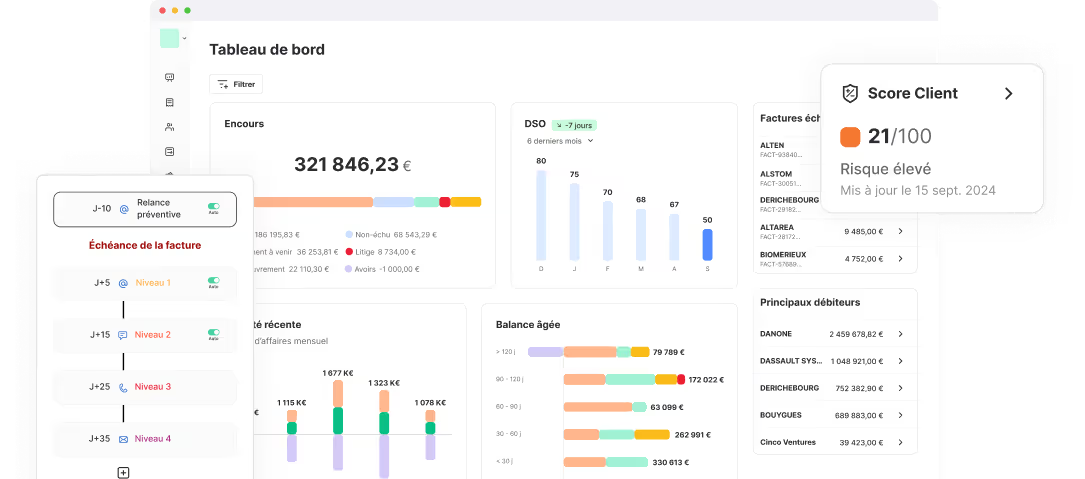
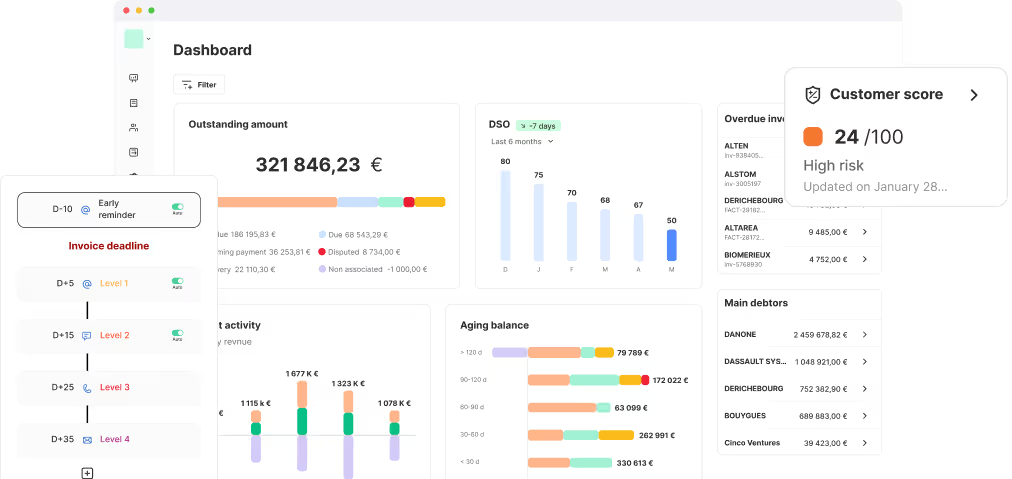
- D+22: first postal reminder by standard letter. The letter channel naturally introduces a higher level of severity in the late payment.
- D+28: second standard letter combined with an email, warning that it is the last reminder before demand letter for payment
- D+33: formal demand letter for payment sent by registered mail with acknowledgement of receipt
- D+40 and beyond: if there is still no payment, the case should be transferred to a judicial recovery partner
3 debt collection letter templates
1. Standard debt collection letter (D+22)
This first standard letter reminds your customer of the payment obligations previously agreed. You can mention contractual deadlines, applicable late fees and other relevant information. It marks a shift in communication: the tone is firmer but remains professional and courteous.
Template:
Subject: Payment reminder: invoice n°[XXX] overdue by [XXX] days
[Customer title] [Customer name]
We note that invoice n°[XXX] for [XXX] €, issued on [date] and due on [date], remains unpaid to this day.
According to our terms and conditions, please proceed with payment within six days from receipt of this letter.
After this period, late payment fees may apply, as well as a fixed compensation fee for the cost of recovering the debt provided for under The Late Payment of Commercial Debts (Interest) Act 1998.
We are enclosing a copy of the invoice for reference. If the payment has already been made, please disregard this reminder or send us your proof of payment.
Should you have any questions, please do not hesitate to contact us.
Kind regards,
[Signature]
2. Registered debt collection letter (D+28)
If you still have no response, a second debt collection letter is required. This time, the tone becomes much firmer. This is your final amicable reminder before issuing a registered formal demand letter for payment. Make sure you send a copy by email as well.
Your registered debt collection letter must include:
- that it is the last reminder before formal demand letter for payment
- that the case may be transferred for legal recovery
- the exact amount due, including late fees and a fixed compensation fee for the cost of recovering the debt
Template:
Subject: Final reminder before formal demand: unpaid invoice n°[XXX]
[Customer title] [Customer name]
Despite multiple reminders, invoice n°[XXX] amounting to [XXX] €, issued on [date] and overdue since [date], remains unpaid.
We require payment within six calendar days. Failing this, we will have no choice but to send a formal demand letter by registered mail with acknowledgement of receipt, which may be followed by transfer of the case to a mandated third party for judicial recovery.
This letter constitutes our final amicable reminder. Please note that late payment fees of [amount] and the fixed compensation fee of [amount] € apply in accordance with current regulations.
We look forward to your prompt response.
Kind regards,
[Signature]
3. Formal demand letter (registered with AR) – D+33
This registered debt collection letter formally opens the litigation phase. It must include all required legal references: amount due, late fees, fixed compensation fee, granted deadline and mention of possible legal action.
You can find a full guide and template in our article “Demand letter for payment: free template and best practices”.
If the formal demand remains unanswered, you can prepare a recovery file for judicial action.
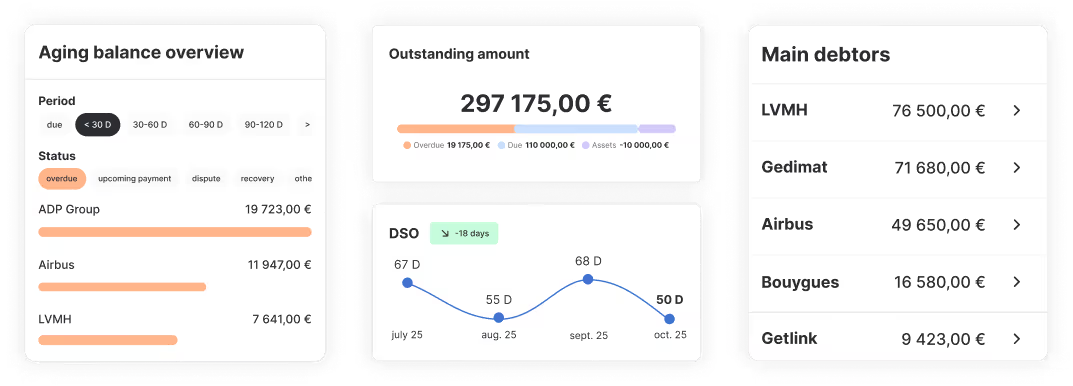
With our debt collection software LeanPay, this is entirely possible. In two clicks, you can generate a complete litigation file including accounting documents, communication history, reminder logs (all channels, not just letters), the formal demand letter and any additional documents required.
This file is admissible evidence, proving that you complied with your obligations and attempted all amicable solutions before legal escalation. It provides legal security in case of dispute.
Once generated, you can send the file by email to your usual recovery partner (law firm, bailiff, recovery agency) or to our partner Atradius.
Obtenir le modèle :
Obtenir le modèle :